



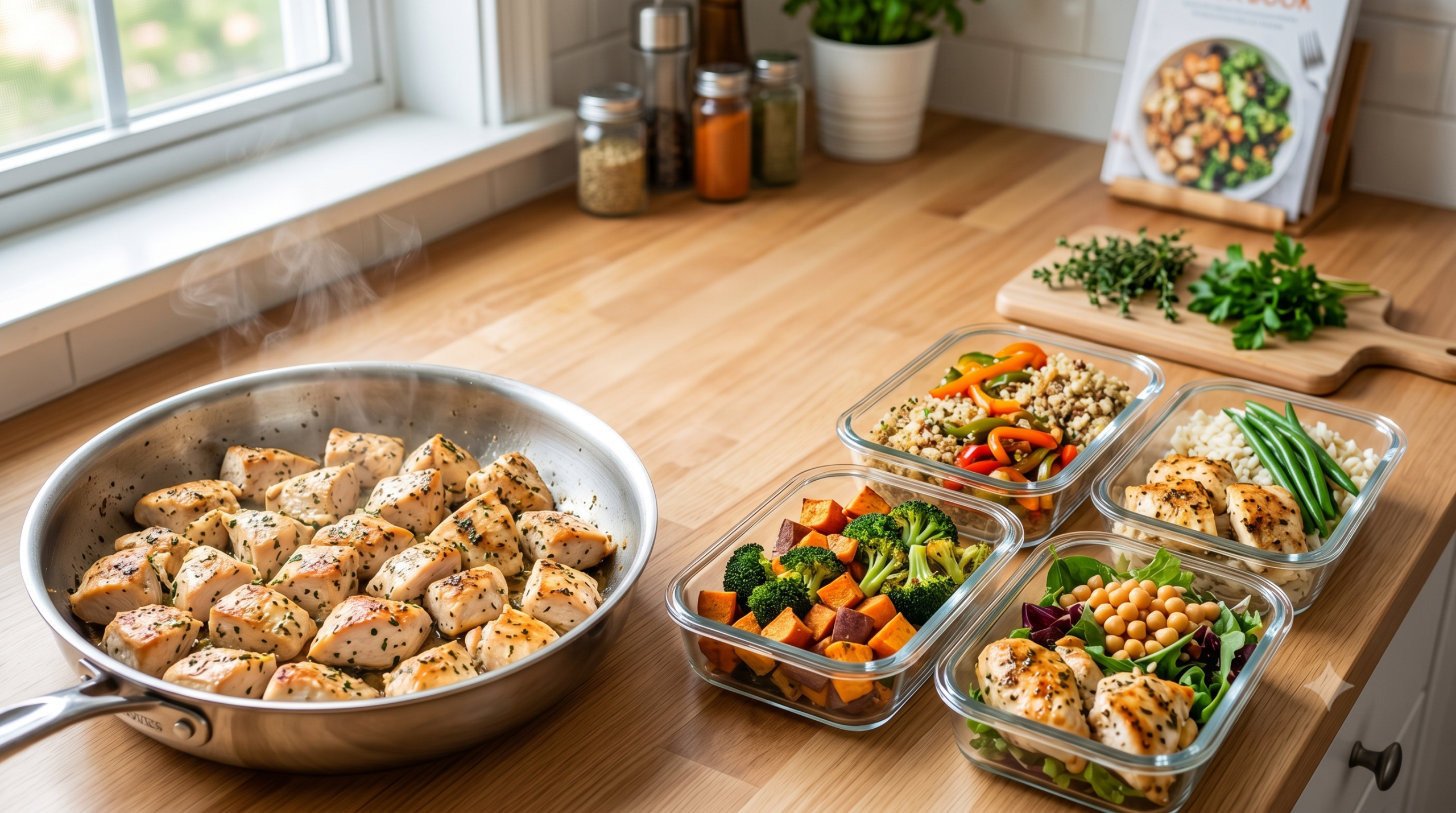
Here’s a confession that might resonate with you: I used to think meal prep meant dedicating an entire Sunday afternoon to cooking, filling dozens of containers, and essentially running a small restaurant out of my kitchen. Spoiler alert—I burned out after exactly two weeks. But then I discovered something that genuinely transformed my relationship with weeknight cooking, and it’s embarrassingly simple: just prep one protein.
That’s it. Twenty minutes on a weekend, one big batch of protein, and suddenly you’re the person who “always has dinner figured out.” No elaborate systems, no color-coded containers, no social media-worthy fridge organization. Just one strategic move that creates a ripple effect through your entire week.
Why One Protein Is the Ultimate Game-Changer
The magic of single-protein batch cooking lies in its versatility and low barrier to entry. When you have two pounds of cooked chicken, a batch of seasoned ground beef, or a container of baked tofu ready to go, you’ve eliminated the most time-consuming part of weeknight cooking. Protein typically takes the longest to prepare safely—it needs proper thawing, cooking to the right temperature, and adequate resting time. Remove that obstacle, and dinner becomes assembly rather than production.
Think about it this way: that prepped protein can become Monday’s grain bowl, Tuesday’s tacos, Wednesday’s salad topper, Thursday’s stir-fry, and Friday’s quick pasta. The protein stays constant while everything around it changes. Your taste buds never get bored because the supporting cast—vegetables, sauces, grains, and seasonings—rotates constantly.
This approach also respects the reality of modern life. Most of us don’t have the mental bandwidth to plan seven completely different meals, shop for dozens of ingredients, and execute complex recipes after a long day. But we can absolutely commit to twenty minutes of focused cooking once a week.
Choosing Your Protein: A Universal Guide
The beauty of this method is that it works regardless of where you live or what’s available at your local market. The key is selecting a protein that’s affordable in your area, stores well for 4-5 days, and adapts to multiple flavor profiles without becoming monotonous.
Chicken thighs or breasts are the classic choice for good reason—they’re available almost everywhere, relatively economical, and take well to virtually any cuisine. Season simply with salt and pepper during batch cooking, and you preserve maximum flexibility for the week ahead. Ground meat (beef, turkey, pork, or lamb) offers another excellent option because it cooks quickly and crumbles easily into different dishes.
For plant-based eaters, consider batch-cooking chickpeas, lentils, or firm tofu. Legumes are pantry staples worldwide and incredibly cost-effective. A big pot of seasoned black beans or a sheet pan of crispy baked tofu provides the same weeknight convenience as any animal protein.
Here’s a practical tip: keep your batch-cooked protein seasoned simply. Basic salt, pepper, and maybe garlic powder give you a neutral canvas. You’ll add the bold flavors—curry paste, taco seasoning, teriyaki sauce, Italian herbs—when you’re assembling each individual meal. This prevents flavor fatigue and lets the same protein feel completely different from Monday to Friday.
The Actual 20-Minute Method
Let’s break down exactly how this works in practice. You’ll need one sheet pan or large skillet, your protein of choice, and minimal seasoning.
- For chicken (thighs or breasts): Preheat oven to 425°F/220°C. Arrange 2-3 pounds of chicken on a sheet pan, drizzle with oil, season with salt and pepper. Roast for 20-25 minutes until internal temperature reaches 165°F/74°C. Let rest, then slice or shred.
- For ground meat: Heat a large skillet over medium-high heat. Add 2 pounds of ground meat, break it up with a spatula, and cook until browned throughout—about 10-12 minutes. Drain excess fat and season lightly.
- For legumes: If using canned, simply drain, rinse, and warm 3-4 cans in a pot with a splash of broth and basic seasonings. For dried legumes, use a pressure cooker or plan for longer passive cooking time.
- For tofu: Press firm tofu to remove excess water, cube it, toss with oil and salt, then bake at 400°F/200°C for 20-25 minutes, flipping halfway through.
Once cooked, divide your protein into portions and refrigerate immediately. Glass containers work well, but any airtight container does the job. Most cooked proteins stay fresh for 4-5 days when properly stored.
Building Complete Meals in Minutes
Now comes the fun part—turning that prepped protein into actual dinners. The formula is simple: protein + vegetable + base + sauce. Each component can be as simple or elaborate as your energy level allows.
On tired nights, that might mean shredded chicken over pre-washed salad greens with bottled dressing and some crusty bread. On nights when you have more bandwidth, you might sauté fresh vegetables, cook some rice, and make a quick pan sauce. The protein—your biggest time investment—is already handled either way.
Here are five quick combinations that work with almost any batch-cooked protein:
- Over rice with steamed vegetables and teriyaki or soy-based sauce
- In tortillas with shredded cabbage, salsa, and lime
- Tossed with pasta, olive oil, garlic, and whatever vegetables you have
- On top of grain bowls with roasted vegetables and tahini or yogurt dressing
- Stirred into soups or stews that need a protein boost
The vegetables and bases can be as convenient as you need them to be. Frozen vegetables, pre-cut produce, microwave rice packets, and jarred sauces are all legitimate tools. This isn’t about making everything from scratch—it’s about making dinner happen consistently.
Making This Habit Stick
The reason this approach works when more elaborate meal prep fails is sustainability. Twenty minutes is a small enough commitment that you’ll actually do it, even on busy weekends. And once you experience the relief of opening your fridge on a Wednesday night and seeing dinner half-done, the habit reinforces itself.
Start by committing to just two weeks. Pick the same protein both times to simplify decision-making. After those two weeks, evaluate: Are you eating better? Spending less on takeout? Feeling less stressed about dinner? Most people find the answer is yes on all counts.
If you want to level up eventually, you can add a second batch-cooked element—maybe roasted vegetables or cooked grains. But don’t rush to complicate things. The power of this method is its simplicity. One protein, twenty minutes, and a week of dinners that practically make themselves. That’s not just meal prep—that’s freedom.