



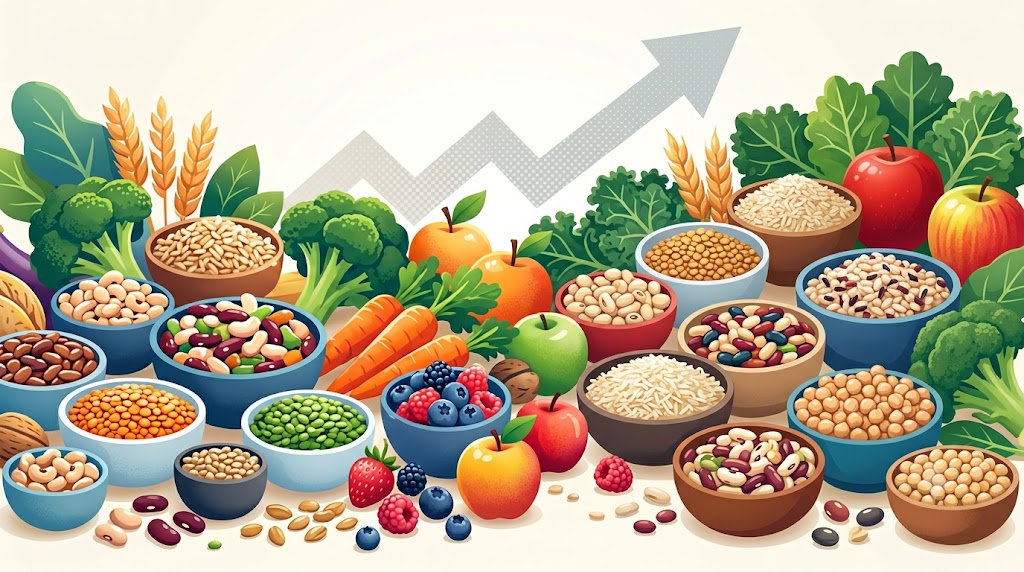
Here’s a number that should make you pause: the average American consumes about 15 grams of fiber daily. The recommended intake? At least 25 to 30 grams. That’s a gap of nearly 50%—and most people have no idea they’re falling short. We’re not talking about some obscure micronutrient here. Fiber is the unsung workhorse of digestive health, blood sugar regulation, and even cardiovascular protection. Yet somehow, it’s become the nutrient we collectively forgot.
The good news? Closing that fiber gap doesn’t require a dietary revolution. You don’t need to become a raw food enthusiast or survive on bowls of bran flakes that taste like cardboard. With a few strategic swaps and additions, you can double your fiber intake while eating foods you actually enjoy. Let me show you how.
Why the Fiber Gap Matters More Than You Think
Fiber does far more than keep your digestive system running smoothly—though that alone is worth paying attention to. Soluble fiber forms a gel-like substance in your gut that helps slow the absorption of sugar, preventing those energy crashes that send you reaching for another coffee at 3 PM. Insoluble fiber adds bulk to your stool and helps food move through your system efficiently, reducing that uncomfortable bloated feeling many people accept as normal.
But the benefits extend beyond your gut. Research consistently links adequate fiber intake to lower cholesterol levels, reduced risk of heart disease, and better weight management. Fiber-rich foods tend to be more filling, which means you naturally eat less without feeling deprived. Your gut microbiome—that complex ecosystem of bacteria that influences everything from immunity to mood—thrives on fiber. When you starve it, the consequences ripple throughout your body in ways scientists are only beginning to understand.
Now, I’ll admit that some of these claims can sound almost too good to be true. Surely one nutrient can’t do all that? And you’re right to be skeptical—there’s certainly some exaggeration in how fiber is marketed. But the core logic holds up: fiber supports fundamental biological processes that affect multiple systems. It’s not magic; it’s just good nutrition that we’ve somehow engineered out of our modern diets.
The Swap Strategy: Fiber Without the Sacrifice
The easiest path to more fiber isn’t addition—it’s substitution. You’re already eating bread, rice, and pasta. Simply switching to whole-grain versions can add 3 to 5 grams of fiber per serving without changing your meals at all. White bread averages about 1 gram of fiber per slice; whole wheat delivers 2 to 3 grams. Make that swap for your morning toast and lunchtime sandwich, and you’ve already added 4 to 8 grams to your daily intake.
The same principle applies to your grains. Swap white rice for brown rice, quinoa, or farro. Choose whole wheat pasta over refined. These aren’t dramatic changes—they’re lateral moves that preserve the structure of meals you already enjoy. The texture takes some getting used to, sure, but most people adapt within a week or two.
Here are some high-impact swaps to consider:
- White bread → Whole grain bread (adds 2+ grams per slice)
- Regular pasta → Whole wheat or legume-based pasta (adds 4-6 grams per serving)
- White rice → Brown rice, quinoa, or cauliflower rice blend (adds 2-4 grams per cup)
- Sugary cereal → Oatmeal with berries (adds 5-8 grams per bowl)
- Chips → Air-popped popcorn (3 grams per 3-cup serving)
The Addition Approach: Sneaking Fiber Into Every Meal
Beyond swaps, there’s the art of strategic addition—finding opportunities to slip fiber into meals without fundamentally changing what’s on your plate. This approach works because it’s invisible. You’re not eating differently; you’re just eating smarter.
Breakfast offers the easiest wins. Add a tablespoon of chia seeds or ground flaxseed to your yogurt, smoothie, or oatmeal. That’s an instant 3 to 4 grams of fiber that you won’t even taste. Throw a handful of berries on top—raspberries are fiber superstars at 8 grams per cup—and you’ve transformed a mediocre breakfast into a fiber powerhouse.
At lunch and dinner, vegetables become your secret weapon. Add spinach to your sandwich. Throw extra vegetables into your pasta sauce. Include a side salad with beans or chickpeas. Speaking of legumes, they’re arguably the most underutilized fiber source in the Western diet. Half a cup of black beans delivers 7 grams of fiber. Lentils pack 8 grams per half cup. You can add them to soups, salads, tacos, and grain bowls without anyone accusing you of being a health nut.
Snacking strategically matters too. Instead of reaching for processed snacks, keep fiber-rich options accessible. An apple with almond butter gives you 4 grams. A handful of almonds adds 3.5 grams. Hummus with raw vegetables can easily contribute 5 to 7 grams depending on your portion.
The Gradual Game Plan: Why Slow Wins
Here’s where most people go wrong: they read articles like this, get motivated, and immediately triple their fiber intake overnight. Then they spend the next three days dealing with bloating, gas, and general digestive rebellion. Their conclusion? Fiber isn’t for them.
But the problem isn’t fiber—it’s the pace of change. Your gut microbiome needs time to adjust to increased fiber intake. The bacteria that ferment fiber need to proliferate, and that process doesn’t happen overnight. Rush it, and you’ll experience exactly the discomfort that makes people abandon their efforts.
The smarter approach is incremental. Add 3 to 5 grams of fiber per day for a week. Let your system adapt. Then add another 3 to 5 grams. Within a month, you can comfortably double your intake without digestive drama. Hydration matters too—fiber absorbs water, so increasing your fiber without increasing your fluids is a recipe for constipation. Aim for an extra glass or two of water as you ramp up.
Making It Stick: The Simplicity Principle
Sustainable dietary changes share one characteristic: simplicity. If closing your fiber gap requires meal prepping elaborate dishes every Sunday or buying obscure ingredients from specialty stores, you won’t maintain it. The strategies that work are the ones that integrate seamlessly into your existing routine.
Start by identifying your three most frequent meals—the things you eat on autopilot. Then find one fiber upgrade for each. Maybe it’s switching your sandwich bread. Maybe it’s adding berries to your morning routine. Maybe it’s keeping a can of chickpeas in your pantry to toss into whatever you’re cooking. Small hinges swing big doors.
Track your intake for a week using a simple app or food diary. Most people are genuinely surprised by how little fiber they consume—and equally surprised by how easy it is to improve. The goal isn’t perfection; it’s progress. Getting from 15 grams to 25 grams puts you ahead of most people and delivers meaningful health benefits.
The fiber gap is real, but it’s also solvable. You don’t need a nutritionist, a personal chef, or a complete dietary overhaul. You need awareness, a handful of simple swaps, and the patience to let your body adapt. Start today with one small change. Your gut—and the trillions of bacteria living in it—will thank you.