



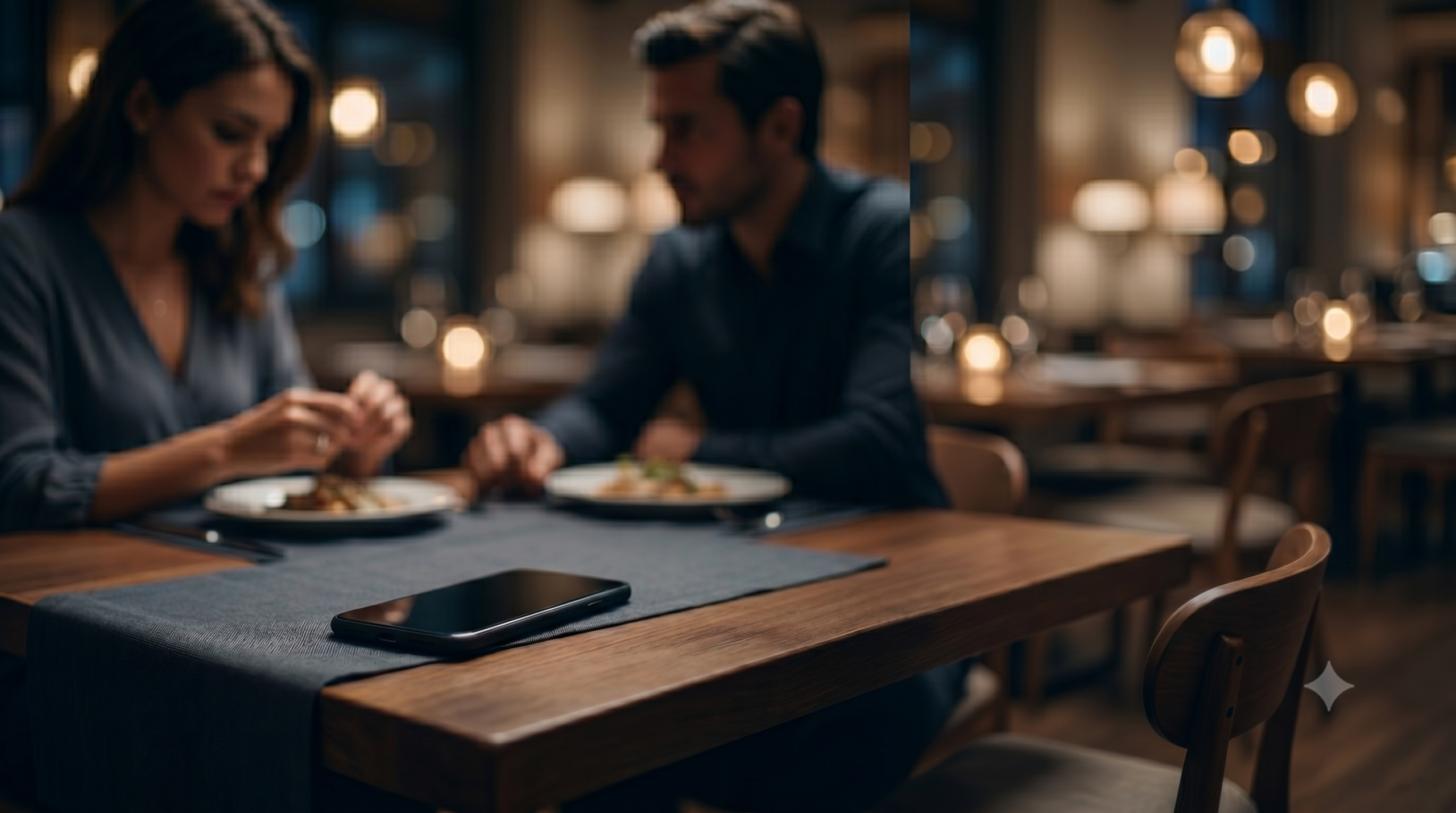
You’re sitting across from your partner at dinner. The conversation is flowing, the food is great, and everything seems perfect—except for one thing. Their phone is face-up on the table between you. They haven’t touched it once. They haven’t even glanced at it. Yet somehow, you feel less connected than you should.
This isn’t your imagination playing tricks on you. Science has revealed something fascinating and slightly unsettling: the mere presence of a smartphone can fundamentally alter the quality of human connection, even when no one is using it. Your brain chemistry is literally being affected by a device that’s just sitting there, doing absolutely nothing.
The “iPhone Effect”: What Researchers Actually Found
In 2012, researchers Andrew Przybylski and Netta Weinstein from the University of Essex conducted a study that would change how we understand modern relationships. They placed pairs of strangers in a room and asked them to have a meaningful conversation for ten minutes. The only variable? In some cases, a mobile phone was placed on a nearby desk within peripheral view. In others, a notebook was placed there instead.
The results were striking. Participants who conversed with a phone visible reported significantly lower relationship quality and less closeness to their conversation partner compared to those with the notebook present. They also reported feeling less trust and perceived less empathy from the other person. Remember—no one touched or used the phone. It was simply there.
The researchers theorized that phones serve as environmental cues that activate thoughts about wider social networks, potentially diverting attention from the present interaction. Essentially, your brain recognizes the phone as a portal to other people and other conversations, making your current partner feel less prioritized—even subconsciously.
Your Brain on “Phubbing”: The Neurochemistry of Being Ignored
The act of snubbing someone in favor of your phone has earned its own term: phubbing (phone + snubbing). But the impact goes deeper than hurt feelings. When we feel socially rejected or deprioritized—even in subtle ways—our brains respond with measurable chemical changes.
Research published in the journal Computers in Human Behavior found that being phubbed activates similar neural pathways to those triggered by social exclusion. When humans experience rejection, the brain’s anterior cingulate cortex lights up—the same region activated during physical pain. This isn’t metaphorical. Social pain and physical pain share neurological real estate.
Additionally, studies on social bonding have shown that positive face-to-face interactions typically increase oxytocin levels—the hormone associated with trust, bonding, and attachment. When interactions feel diminished or interrupted (even by the passive presence of technology), this oxytocin release may be inhibited. Your partner might literally be producing less of the “love hormone” because your phone is on the table.
A 2017 study by Roberts and David found that partner phubbing was significantly associated with lower relationship satisfaction and higher levels of depression among the phubbed partners. The mechanism appears to work through reduced feelings of relationship quality and life satisfaction.
Why Your Brain Can’t Ignore the Phone (Even When You Try)
Here’s where it gets interesting. You might think, “I have great self-control. I can ignore my phone.” But your brain disagrees.
Research from the University of Texas at Austin, led by Adrian Ward, demonstrated that the mere presence of a smartphone reduces available cognitive capacity—what researchers call “brain drain.” In their 2017 study published in the Journal of the Association for Consumer Research, participants performed better on cognitive tasks when their phones were in another room compared to when phones were on the desk or even in a pocket or bag.
The researchers concluded that even when people are successful at maintaining sustained attention—meaning they aren’t distracted by the phone—the process of actively working to not think about the phone occupies cognitive resources. Your brain is essentially running a background program called “don’t check the phone,” and that program costs processing power that could otherwise be used for deeper engagement with your partner.
This explains why conversations feel subtly different when phones are present. Part of your mental bandwidth is unconsciously monitoring and resisting the device, leaving less capacity for the nuanced emotional attunement that intimate connection requires.
The Practical Fix: Creating Phone-Free Zones That Actually Work
Understanding the science is useful, but behavioral change requires practical strategies. Here are evidence-informed approaches to reclaim your intimate moments:
- Designate a “phone parking spot” outside your shared spaces. Research suggests out of sight correlates with improved cognitive availability. A charging station in another room works better than a drawer in the same room.
- Create ritual-based phone-free times rather than relying on willpower. Rituals (like placing phones in a basket during dinner) reduce decision fatigue. You’re not choosing to ignore your phone repeatedly; you’ve made one decision that handles the entire meal.
- Use airplane mode strategically during key connection times. This addresses the anxiety some people feel about missing urgent communications. Knowing you’re unreachable removes the cognitive load of potential interruption.
- Discuss the research together. Framing phone-free time as something you’re doing together to optimize your neurochemistry removes any accusatory tone. You’re both fighting the same environmental factor.
- Start with one protected time block and expand. Attempting to overhaul all your habits simultaneously typically fails. Choose your highest-value connection time—perhaps the first 30 minutes after reuniting each day—and protect that fiercely.
Reframing the Conversation: From Blame to Brain Science
Perhaps the most valuable aspect of this research is how it reframes a common relationship conflict. Phone usage arguments often devolve into accusations of disrespect or inattention. But the science reveals something more nuanced: we’re all susceptible to these effects, and the environment itself shapes our capacity for connection.
When you understand that your partner’s brain literally functions differently depending on phone proximity, it becomes less about willpower or caring enough, and more about designing your shared environment for relational success. This is practical, actionable, and removes the moral judgment that often poisons these conversations.
The phones themselves aren’t evil. They connect us to loved ones far away, provide information, and serve countless useful functions. But like any powerful tool, they require intentional management. A hammer is essential for building; you still wouldn’t leave it on the dinner table during a romantic meal.
Your relationship deserves the full bandwidth of both brains involved. By understanding how phone placement affects neurochemistry and implementing simple environmental changes, you’re not just avoiding a bad habit—you’re actively creating the conditions for deeper intimacy, stronger trust, and more satisfying connection.
The most intimate thing you might do today costs nothing and takes two seconds: put your phone in another room and give your partner your whole brain.