



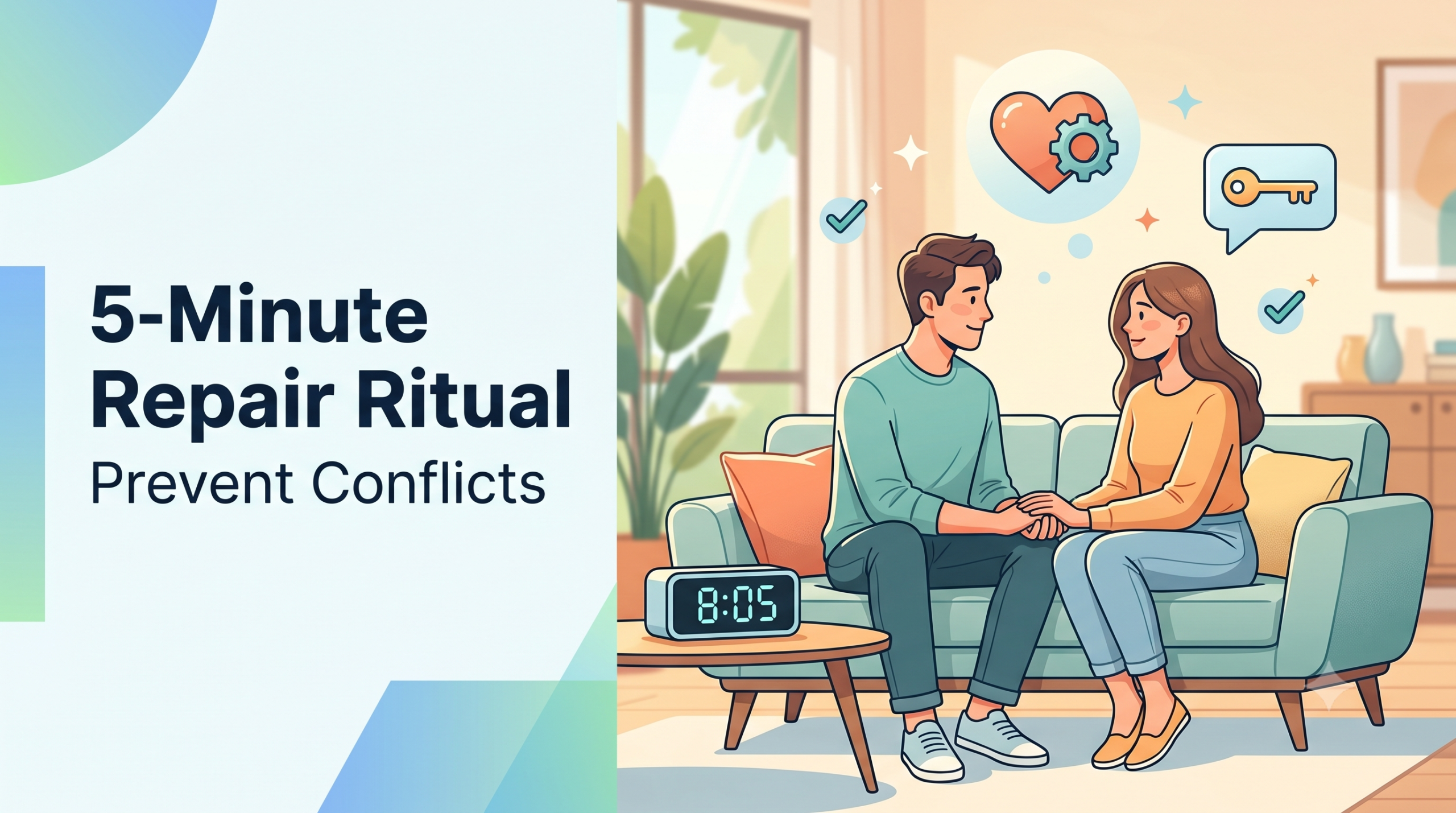
What if I told you that the difference between couples who thrive and those who slowly drift apart comes down to just five minutes a day? It sounds almost too simple, yet decades of relationship research consistently points to one truth: small, consistent moments of connection matter far more than grand gestures or marathon conversations.
The “5-Minute Repair Ritual” isn’t just another wellness trend—it’s a practical framework built on solid science that can transform how you and your partner navigate the inevitable friction of daily life. Before resentments calcify, before misunderstandings snowball into major conflicts, these brief daily check-ins act as a pressure valve, releasing tension before it builds into something destructive.
The Science Behind Small Moments of Connection
Dr. John Gottman, renowned relationship researcher at the University of Washington, spent over four decades studying what makes relationships succeed or fail. His research, published in the Journal of Marriage and Family, found that couples who maintain a 5:1 ratio of positive to negative interactions during conflict are significantly more likely to stay together. But here’s what’s often overlooked: these positive interactions don’t need to be elaborate. Brief moments of genuine attention—what Gottman calls “bids for connection”—are the building blocks of relationship resilience.
According to Gottman’s research at The Gottman Institute, couples who regularly turn toward each other’s bids for connection have an 86% chance of staying together, compared to just 33% for those who frequently turn away. A “bid” can be as simple as sharing an observation about the day or asking for a quick opinion. The key is consistent responsiveness, not duration.
Research published in the journal Personal Relationships (2015) by researchers including Brittany Jakubiak and Brooke Feeney demonstrated that daily expressions of affection and brief moments of responsive interaction contribute significantly to relationship satisfaction over time. These findings support what many couples intuitively know: it’s the everyday moments that matter most.
What the 5-Minute Repair Ritual Actually Looks Like
Forget the image of sitting cross-legged, facing each other in serious conversation. The 5-Minute Repair Ritual is designed to fit into real life—while cooking dinner, during a commercial break, or in the few minutes before sleep.
The ritual has three simple components, each taking roughly 90 seconds:
- The Temperature Check (90 seconds): Each partner shares one word describing their emotional state, followed by a brief explanation. “Overwhelmed—work deadlines are stacking up.” No fixing, no advice. Just acknowledgment.
- The Appreciation Drop (90 seconds): Share one specific thing you appreciated about your partner that day. Specificity matters. “Thank you for handling the grocery run” hits differently than a generic “thanks for everything.”
- The Tomorrow Bridge (90 seconds): Briefly share one thing happening tomorrow that might affect your mood or availability. This simple heads-up prevents countless misunderstandings.
This structure works because it addresses the three most common sources of relationship conflict: feeling emotionally invisible, feeling taken for granted, and being blindsided by a partner’s stress or schedule.
Why Most Couples Skip Check-ins (And Why That’s Dangerous)
Research from UCLA’s Marriage and Family Development Project, led by researchers including Thomas Bradbury, found through longitudinal studies that couples who avoid discussing small issues are more likely to experience significant relationship decline over time. The pattern is predictable: minor irritations are dismissed as “not worth mentioning,” micro-resentments accumulate beneath the surface, eventually these suppressed grievances fuel disproportionate reactions to trivial triggers.
That explosive argument about dishes in the sink? It was never really about the dishes. It was about six months of feeling unappreciated, three months of swallowed frustrations, and one moment when the emotional container finally overflowed.
The 5-Minute Repair Ritual works precisely because it prevents this accumulation. By creating a daily container for small emotional exchanges, couples process experiences in real-time rather than storing them for later detonation.
Making the Ritual Stick: Practical Implementation Strategies
Knowing about a beneficial habit and actually doing it are two different challenges. Here’s how to make the 5-Minute Repair Ritual a sustainable part of your relationship:
- Anchor it to an existing routine: Habit stacking—attaching a new behavior to an established one—dramatically increases follow-through. Consider doing your check-in while morning coffee brews, during the evening dog walk, or as a pre-sleep ritual.
- Start with three days per week: Perfectionism kills consistency. Committing to daily check-ins often leads to guilt when missed, then abandonment. Start with Monday, Wednesday, and Friday. Build from there.
- Use a physical cue: Some couples place a small object—a stone, a card—somewhere visible as a reminder. When you see it, you do the ritual. Simple visual cues bypass the need for willpower.
- Allow imperfection: Some check-ins will be rushed, distracted, or cut short. That’s fine. A 2-minute check-in still beats no check-in. Progress over perfection.
Research on habit formation published in the European Journal of Social Psychology by Phillippa Lally and colleagues (2010) found that missing one opportunity does not significantly derail habit formation. What matters is the overall pattern, not flawless execution.
When Five Minutes Reveals Something Bigger
Sometimes the daily check-in will surface issues that need more than five minutes. This is a feature, not a bug. The ritual serves as an early detection system, identifying problems while they’re still manageable.
When something significant emerges, acknowledge it explicitly: “This sounds like something we need more time to discuss. Can we set aside 30 minutes this weekend to really dig into this?” This approach validates the importance of the issue while protecting the ritual from becoming an overwhelming emotional marathon.
Studies on communication in relationships, including work published by researchers at the University of Denver in the Journal of Family Psychology, suggest that structured communication approaches help couples address issues before they escalate into major problems.
Start Tonight: Your First Check-in
The best relationship advice is the advice you actually use. Tonight, try a simplified version of the ritual with just two questions: “What was the hardest part of your day?” and “What’s one thing you’re looking forward to tomorrow?”
Listen fully. Respond warmly. Resist the urge to problem-solve. That’s it.
Relationship maintenance doesn’t require weekend retreats or expensive therapy (though both have their place). It requires small, consistent deposits of attention into your shared emotional account. Five minutes a day, every day, compounds into something remarkable: a partnership where both people feel seen, appreciated, and prepared for whatever tomorrow brings.
The 5-Minute Repair Ritual won’t solve every relationship problem. But it will prevent most problems from becoming relationship-defining crises. And in a world that constantly demands our attention, choosing to give five focused minutes to the person you love might be the most powerful investment you ever make.