



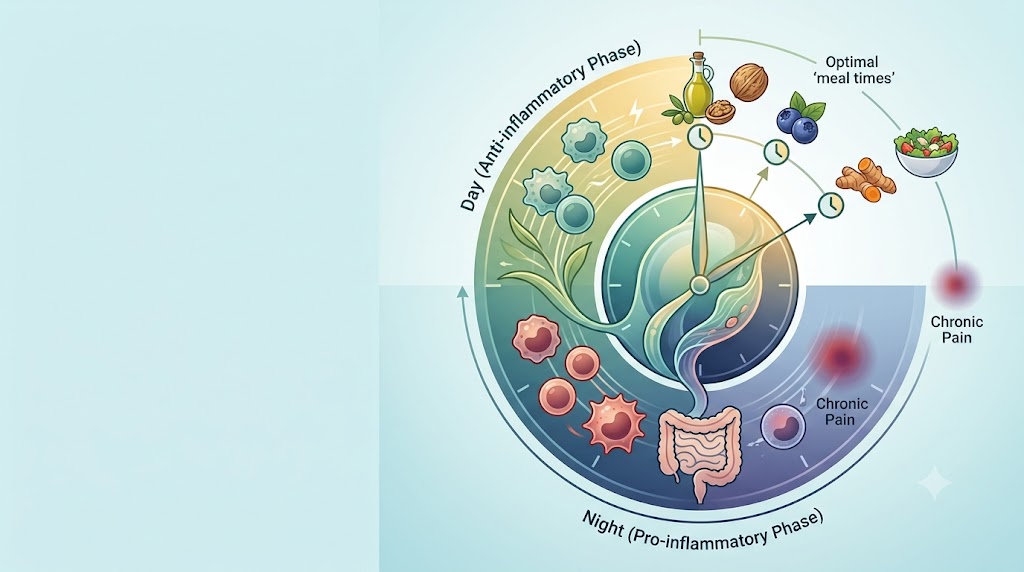
What if the secret to reducing your chronic pain wasn’t just about what you eat, but when you eat it? For millions of people living with persistent inflammation—whether from arthritis, fibromyalgia, or autoimmune conditions—this question is more than academic. It’s the difference between a good day and a bad one.
Your immune system doesn’t operate on a flat line throughout the day. Like nearly every system in your body, it follows a circadian rhythm—a 24-hour cycle that influences when inflammation peaks, when healing accelerates, and when your body is most vulnerable to inflammatory triggers. Understanding this “inflammation clock” and aligning your meals accordingly could be one of the most overlooked strategies for managing chronic pain naturally.
Your Immune System Has a Schedule
The concept of circadian immunity isn’t new to researchers, but it’s only recently begun filtering into practical health advice. Your immune cells, inflammatory markers, and even pain sensitivity fluctuate predictably throughout the day and night.
Research published in the journal Immunity has demonstrated that pro-inflammatory cytokines—the chemical messengers that drive inflammation—tend to peak in the early morning hours. This explains why many people with rheumatoid arthritis or other inflammatory conditions experience their worst stiffness and pain upon waking. Your body’s inflammatory response is literally at its highest point.
Conversely, anti-inflammatory processes and tissue repair tend to dominate during certain phases of sleep and early evening. Cortisol, your body’s natural anti-inflammatory hormone, typically peaks around 8 AM to help counteract morning inflammation, then gradually declines throughout the day.
This biological rhythm evolved for good reasons—heightened immune vigilance during active hours protected our ancestors from daytime threats and infections. But in our modern world of chronic stress, processed foods, and irregular schedules, this same system can work against us.
The Food-Inflammation Connection: Timing Matters
We’ve long known that certain foods promote inflammation while others help reduce it. Processed sugars, refined carbohydrates, and industrial seed oils tend to trigger inflammatory responses. Meanwhile, omega-3 fatty acids, colorful vegetables, and foods rich in polyphenols generally have anti-inflammatory effects.
What’s becoming clearer is that the timing of these foods matters significantly. Eating inflammatory foods when your immune system is already primed for inflammation may amplify the response. Conversely, consuming anti-inflammatory foods during key windows may enhance their protective effects.
A growing body of research on chrononutrition—the study of how meal timing affects metabolism and health—suggests that our bodies process identical foods differently depending on when we eat them. Studies have shown that glucose tolerance is significantly better in the morning than in the evening, meaning the same carbohydrate load produces a smaller blood sugar spike earlier in the day. Since blood sugar spikes can trigger inflammatory cascades, this timing effect has direct implications for inflammation management.
Time-restricted eating, where food consumption is limited to a specific window each day, has also shown promise for reducing inflammatory markers. Research published in Cell Metabolism found that limiting eating to an 8-10 hour window improved various metabolic markers, even without changes to calorie intake or food quality.
Practical Strategies for Inflammation-Aware Eating
Translating this science into daily practice doesn’t require complicated protocols. Here are actionable strategies you can implement starting today:
- Front-load your anti-inflammatory foods. Make breakfast and lunch your most nutrient-dense, anti-inflammatory meals. Include fatty fish, leafy greens, berries, nuts, and olive oil earlier in the day when your body can best utilize their protective compounds.
- Keep evening meals lighter and earlier. Aim to finish eating at least three hours before bed. Late-night eating, especially of processed or high-sugar foods, can disrupt both sleep and inflammatory processes during the critical overnight recovery period.
- Consider a consistent eating window. Rather than grazing throughout the day, try consolidating your meals into a 10-12 hour window. For example, if you have breakfast at 8 AM, finish dinner by 6-8 PM. This gives your body a clear fasting period for repair and inflammatory cleanup.
- Pay attention to your personal inflammation patterns. Track when your pain and stiffness are worst. If mornings are your difficult time, an anti-inflammatory breakfast becomes especially important. If evenings are problematic, examine what and when you’re eating in the afternoon.
- Don’t skip breakfast if you have morning inflammation. While intermittent fasting works well for some people, those with significant morning inflammation may benefit from an early, anti-inflammatory breakfast to support the body’s natural cortisol response.
Beyond Food: Supporting Your Inflammation Clock
Meal timing works best as part of a broader circadian-supportive lifestyle. Your inflammation clock is synchronized by the same cues that regulate your sleep-wake cycle, meaning that light exposure, sleep consistency, and stress management all play interconnected roles.
Morning light exposure helps set your master circadian clock, which in turn coordinates your immune rhythm. Aim for 10-20 minutes of natural daylight within an hour of waking, even on cloudy days. This simple practice helps ensure your inflammatory and anti-inflammatory processes peak at appropriate times.
Sleep consistency may be even more important than sleep duration for inflammation management. Going to bed and waking at similar times—even on weekends—helps maintain the predictable rhythms your immune system depends on. Irregular sleep patterns have been associated with elevated inflammatory markers in multiple studies.
Stress, particularly chronic stress, disrupts circadian cortisol patterns and can flatten the natural rhythm that helps control inflammation. Even brief daily stress-reduction practices—whether meditation, walking, or simply spending time in nature—support healthier immune cycling.
Start Where You Are
You don’t need to overhaul your entire life to benefit from inflammation-aware eating. Start with one or two changes and observe how your body responds over two to three weeks. The goal isn’t perfection—it’s finding a sustainable rhythm that supports your body’s natural healing processes.
Consider keeping a simple journal noting your meal times, food choices, and pain levels throughout the day. Patterns often emerge that can guide personalized adjustments. What works for someone else may not be optimal for you, and your own data is the most valuable guide.
Chronic pain is complex, and no single strategy will eliminate it entirely. But by working with your body’s biological rhythms rather than against them, you give yourself a meaningful advantage. The inflammation clock is always ticking—the question is whether your lifestyle is helping it keep accurate time.