



Here’s a sobering statistic: approximately 95% of American adults don’t consume enough fiber. In the UK and across Europe, the numbers aren’t much better—most people fall significantly short of the recommended 25 to 30 grams per day. We obsess over protein intake, count carbs religiously, and debate the merits of various fats, yet fiber—the nutrient most closely linked to longevity, gut health, and disease prevention—barely registers on our nutritional radar.
The good news? Unlike many nutritional deficiencies that require supplements or dramatic dietary overhauls, closing your fiber gap is surprisingly achievable. With a practical, realistic approach spread over two weeks, you can transform your intake from deficient to optimal—and actually feel the difference. Let’s break down exactly how to make it happen.
Why the Fiber Gap Matters More Than You Think
Fiber isn’t glamorous. It doesn’t promise rapid weight loss or superhuman energy levels. What it does offer is something far more valuable: a foundation for nearly every aspect of your health.
Your gut microbiome—home to trillions of bacteria that influence everything from immunity to mood—relies on fiber as its primary fuel source. When you consistently under-deliver on fiber, you’re essentially starving the beneficial bacteria that keep harmful pathogens in check. Research published in The Lancet found that people consuming the highest amounts of fiber had a 15-30% reduction in all-cause mortality, cardiovascular disease, stroke, type 2 diabetes, and colorectal cancer compared to those eating the least.
Beyond disease prevention, fiber directly impacts how you feel day to day. It stabilizes blood sugar levels by slowing glucose absorption, keeps you fuller longer by adding bulk to meals, and promotes regular bowel movements that most people don’t realize they’re missing until they experience what “normal” actually feels like. The Western diet, heavy on processed foods and refined grains, has created a generation that accepts bloating, energy crashes, and irregular digestion as standard. They’re not.
Week One: Building Your Fiber Foundation
The biggest mistake people make when trying to increase fiber intake is going too hard, too fast. Your gut bacteria need time to adapt to increased fiber, and overwhelming them leads to gas, bloating, and discomfort—exactly the symptoms that cause most people to abandon their efforts within days.
During your first week, focus on adding just 5 to 8 extra grams of fiber per day above your current baseline. For most people, this means moving from roughly 15 grams to somewhere between 20 and 23 grams. Here’s how to do it without overthinking:
- Swap your regular breakfast cereal or toast for rolled oats topped with berries. One cup of cooked oatmeal with half a cup of raspberries delivers about 8 grams of fiber—potentially half your daily increase in one meal.
- Add a side of vegetables to at least two meals per day. Even something as simple as a handful of steamed broccoli or a small side salad contributes 3 to 4 grams.
- Choose whole grain bread over white when making sandwiches. This simple switch adds roughly 2 to 3 grams per two slices.
- Snack on an apple or pear with the skin on instead of processed snack foods. Each piece of fruit provides approximately 4 grams of fiber.
Critically important during this week: increase your water intake proportionally. Fiber absorbs water in your digestive tract, and insufficient hydration leads to constipation—the opposite of what you’re trying to achieve. Aim for an additional two to three glasses of water beyond your normal consumption.
Week Two: Reaching Optimal Levels
By day eight, your gut microbiome has begun adapting to its improved fuel supply. Now it’s time to push toward the 25 to 30 gram target that health authorities across Europe and North America recommend. This week, you’ll add another 5 to 10 grams daily through strategic food choices.
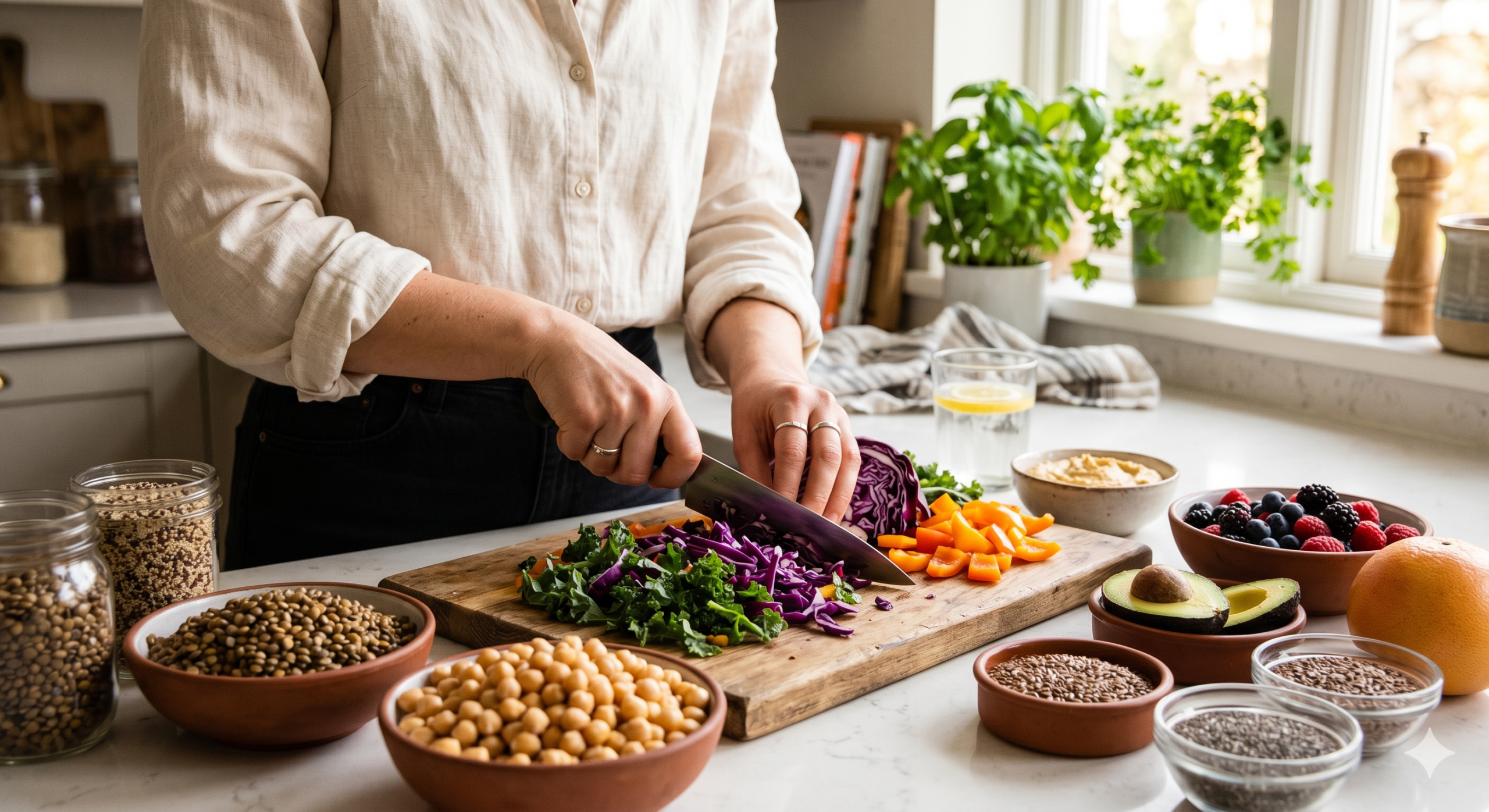
- Introduce legumes into your diet at least three times during the week. Half a cup of cooked lentils, black beans, or chickpeas delivers 7 to 8 grams of fiber. Add them to salads, blend them into soups, or use them as a base for grain bowls.
- Replace refined pasta with whole wheat versions, or try lentil or chickpea-based alternatives that can pack up to 8 grams of fiber per serving.
- Incorporate nuts and seeds as regular additions to meals. Two tablespoons of chia seeds stirred into yogurt or a smoothie add nearly 10 grams of fiber alone.
- Make vegetables the star of at least one meal per day rather than a side player. A large salad with mixed greens, artichoke hearts, and avocado can easily contribute 12 to 15 grams.
Track your intake loosely during this phase—not obsessively, but enough to understand where your fiber is coming from. Most people discover they have two or three meals in their rotation that are fiber deserts, making them obvious candidates for improvement.
Making It Stick: The Sustainability Factor
A two-week plan means nothing if week three sees you sliding back to old habits. The key to long-term success lies in making high-fiber choices your default rather than a conscious decision requiring willpower.
Stock your kitchen for success. Keep frozen vegetables, canned beans (rinsed to reduce sodium), whole grain options, and fresh fruit readily available. When healthy choices are convenient, they happen naturally. Conversely, if reaching your fiber goals requires a special grocery trip or significant meal prep, consistency becomes unlikely.
Learn to love legumes in various forms. Hummus as a snack, bean-based dips, lentil soups, and chickpea curries offer variety while delivering substantial fiber. Many people who claim to dislike beans simply haven’t found their preferred preparation method.
Embrace the concept of “crowding out” rather than restriction. Instead of focusing on what you’re eliminating, concentrate on adding fiber-rich foods to existing meals. This positive framing makes dietary change feel less like deprivation and more like enhancement.
Your Action Plan Starts Now
Close the fiber gap and you address one of the most impactful yet overlooked aspects of modern nutrition. The 95% statistic isn’t a life sentence—it’s an opportunity to separate yourself from the crowd with relatively simple changes.
Start tomorrow morning with that bowl of oatmeal and berries. Add a side of vegetables to your lunch. Choose the whole grain option at dinner. Within two weeks, you’ll have established new patterns that your gut bacteria, your energy levels, and your long-term health will thank you for.
The Western dietary guidelines of 25 to 30 grams daily exist for good reason, backed by decades of research across millions of participants. Meeting them doesn’t require exotic superfoods or expensive supplements—just a practical, realistic approach to eating more plants in their whole form. Your microbiome is waiting.